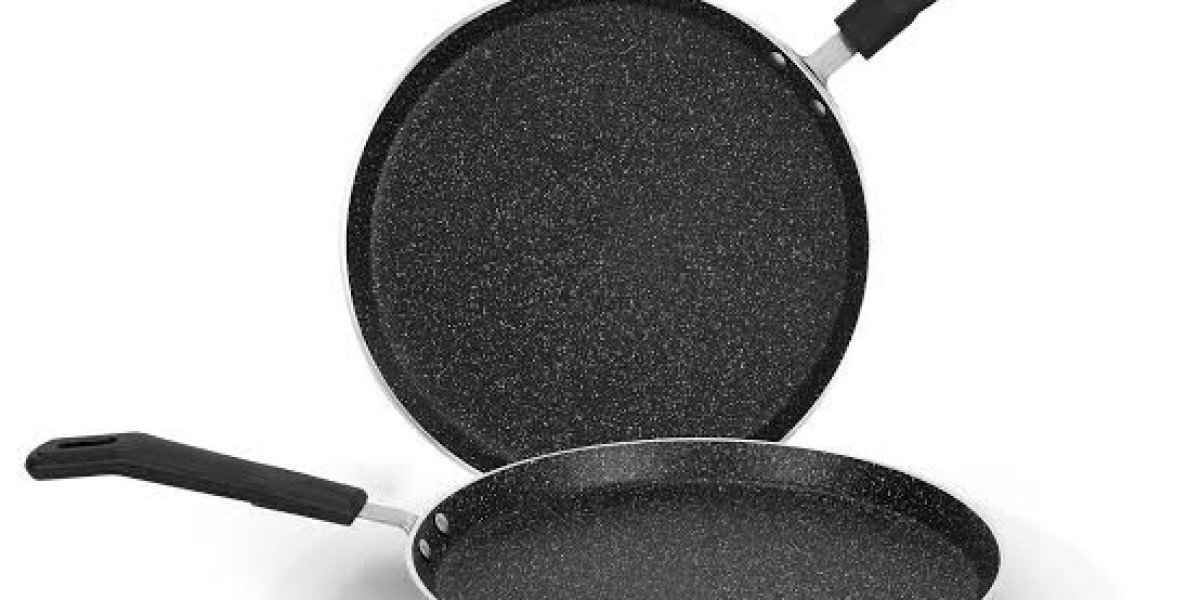

Cooking every day has a rhythm of its own. Some meals take just a few minutes, while others need patience and constant attention. In the middle of all this, the cookware you use quietly affects everything, from how evenly the food cooks to how much time you spend cleaning afterward. That is why many home cooks and experienced chefs now prefer a Hard Anodised Tawa for regular cooking.
According to industry reports, hard anodised cookware has become one of the fastest-growing cookware categories because people are looking for products that last longer, cook more evenly, and need less maintenance. It isn't just about having another pan in the kitchen. It's about making everyday cooking feel simpler without changing the way you already cook.
What Makes a Hard Anodised Tawa Different?
At first glance, a hard anodised tawa looks like any other flat cooking pan. The real difference sits in the material itself.
The aluminium goes through an electrochemical treatment called anodisation. This process changes the outer layer into a much harder surface than ordinary aluminium. In fact, the treated surface becomes almost twice as hard as stainless steel in terms of surface hardness, which explains why it stands up so well to daily use.
That extra strength changes the entire cooking experience.
The surface becomes resistant to scratches, doesn't react with acidic ingredients, and stays in good condition even after years of regular cooking. Unlike untreated aluminium cookware, it doesn't leave any metallic taste in the food either.
It's one of those improvements you don't notice immediately. After months of use, though, the difference becomes obvious.
Heat Spreads Evenly Across the Surface
Uneven heating creates problems that every cook has faced.
One side of the dosa turns brown while another remains pale. Rotis puff in one spot but stay uncooked somewhere else. Pancakes burn before the batter fully cooks.
A quality hard anodised tawa reduces these frustrations because aluminium naturally conducts heat very well. Once treated through anodisation, it keeps that excellent heat distribution while becoming much stronger.
Food cooks more evenly.
That means fewer burnt patches, better texture, and less need to keep moving the food around every few seconds. When you're making breakfast for the whole family, that consistency saves both effort and time.
Cooking Needs Less Oil
Many people today try to reduce the amount of oil they use without changing the taste of their meals.
A hard anodised surface helps with that.
Its smooth finish allows ingredients to release more easily than traditional cookware. Rotis, chillas, uttapams, parathas, pancakes, sandwiches, and several other dishes cook comfortably with very little oil.
Small changes like this matter over time.
The World Health Organization recommends limiting excess fat intake as part of a balanced diet. Using cookware that doesn't demand extra oil makes following that advice much easier during everyday cooking.
Built for Daily Use
Some cookware looks great when it's new.
After a few months, scratches appear, the surface becomes uneven, or the base starts losing its shape.
Daily cooking is demanding. Breakfast, lunch, dinner, weekend snacks, festive recipes...the cookware rarely gets a break.
A hard anodised tawa handles this routine far better because the treated surface resists wear from repeated heating and regular cooking. It also keeps its appearance for a long time without demanding special care.
That reliability matters.
Nobody enjoys replacing cookware every year.
Cleaning Doesn't Feel Like a Chore
Ask anyone what they dislike most after cooking.
Many won't say chopping vegetables or preparing ingredients. They'll mention washing the utensils.
Food sticking firmly to the surface often turns cleaning into the longest part of cooking.
A hard anodised tawa changes that experience. Since food releases more easily, leftover bits don't cling as stubbornly to the cooking surface. Warm water, mild soap, and a soft sponge are enough for routine cleaning.
No endless scrubbing.
No spending twenty minutes trying to remove burnt marks from yesterday's dinner.
For busy households, that's a welcome advantage.
One Tawa, Many Recipes
Versatility is another reason these tawas have become so popular.
Instead of keeping different pans for different dishes, many families rely on one quality tawa for several everyday recipes.
It works well for:
- Rotis and chapatis
- Parathas
- Dosas
- Uttapams
- Chillas
- Pancakes
- French toast
- Sandwiches
- Cutlets
- Tikkis
- Flatbreads
- Toasted wraps
Switching from breakfast to dinner doesn't require changing cookware every time.
That makes everyday cooking feel less complicated.
Strong Enough for Years of Cooking
Buying cookware isn't something people do every month.
Most households expect it to last.
That's exactly where hard anodised cookware earns its reputation.
The treated surface resists corrosion, doesn't peel, and tolerates repeated heating cycles without losing performance. It also handles regular kitchen use better than ordinary aluminium cookware, which often develops scratches much sooner.
Good cookware should stay dependable.
When it does, you spend less time thinking about replacing it and more time enjoying the meals you prepare.
Safe for Different Types of Cooking
People cook a wide variety of dishes every week.
Some recipes include tomatoes, tamarind, lemon juice, or other acidic ingredients. Ordinary aluminium reacts with these foods over time, affecting both flavour and appearance.
A hard anodised surface solves that issue because it forms a protective layer over the aluminium.
This non-reactive surface helps preserve the natural taste of ingredients while also protecting the cookware itself.
It's a small technical detail.
Still, it makes a noticeable difference during regular cooking.
Saves Time Without Changing Your Routine
Most people don't want complicated kitchen gadgets.
They simply want cookware that performs well every single day.
A hard anodised tawa fits naturally into an existing cooking routine. It heats quickly, cooks evenly, needs less oil, and cleans without much effort. None of this asks you to learn new cooking methods or follow special instructions.
You simply cook.
The tawa quietly does its part.
That simplicity becomes valuable on rushed weekday mornings, late evening dinners, or those weekends when everyone seems hungry at the same time.
Choosing the Right Tawa Matters
Not every tawa delivers the same experience.
Before buying one, it's worth paying attention to a few practical details. A thick base helps maintain stable heat during cooking. A comfortable handle makes lifting and turning easier, especially when preparing multiple dishes. The cooking surface should be spacious enough for the recipes you prepare most often, whether that's large dosas or family-sized parathas.
Quality construction also plays a big role.
A well-made hard anodised tawa stays stable on the stovetop, heats evenly across the surface, and keeps performing the same way long after the first few uses.
Good cookware doesn't ask for attention every day.
It simply becomes part of your kitchen routine, quietly helping you prepare meal after meal with less effort, fewer interruptions, and a little more confidence each time you start cooking.