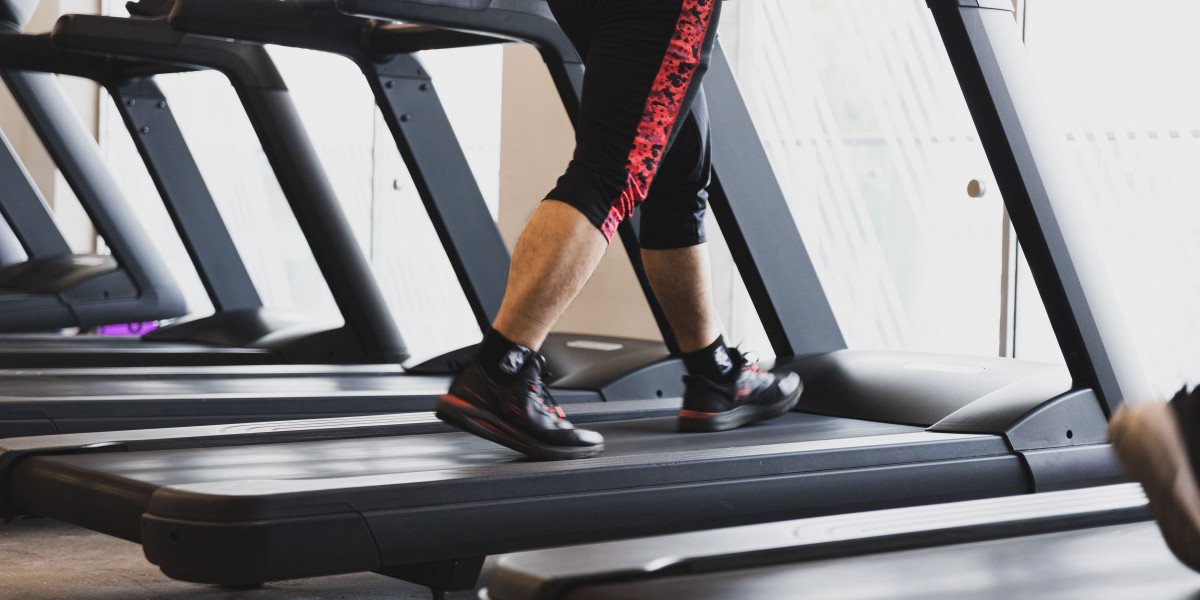

A treadmill can make regular walking, jogging, and running much easier when outdoor conditions, busy schedules, or extreme UAE temperatures get in the way. Instead of planning your workout around the weather, you can train at home whenever it suits you.
For people living in Dubai, Abu Dhabi, Sharjah, Ajman, Ras Al Khaimah, Fujairah, and other parts of the UAE, a home treadmill can be useful for everything from daily walking to structured running workouts.
However, choosing the right machine involves more than looking at the motor power or maximum speed. The ideal treadmill depends on how you plan to use it, how much space you have, who will use it, and which features actually matter to your routine.
Why Buy a Treadmill for Home Use?
A treadmill provides a controlled indoor environment for walking and running.
This can be particularly useful in the UAE during very hot months when outdoor exercise may be uncomfortable. It also eliminates common barriers such as traffic, poor outdoor conditions, or simply not having a suitable walking route nearby.
A home treadmill can support several types of workouts:
Casual daily walking
Brisk walking
Incline walking
Jogging
Running
Interval training
Fitness and conditioning sessions
Gradual return to regular exercise
The most important factor is choosing a machine that matches the way you actually intend to train.
Walking Treadmill or Running Treadmill?
Not every treadmill is designed for the same purpose.
If your primary goal is walking while working, watching television, or completing daily movement, you may not need a large, high-speed running machine.
A compact walking-focused treadmill can be easier to store and may suit smaller apartments.
If you plan to run regularly, however, look for a machine designed to handle higher speeds and repeated impact. Running generally places greater demands on the motor, deck, frame, and cushioning system.
Before buying, ask yourself:
Will I mainly walk, jog, or run?
That one answer can significantly narrow your options.
Consider the Motor
Motor specifications are commonly highlighted when shopping for treadmills, but they should not be considered in isolation.
A treadmill intended for frequent running needs a motor and overall construction appropriate for that workload.
If you mainly walk at moderate speeds, you may not need the same specification as someone training for regular high-speed runs.
Instead of choosing the treadmill with the biggest advertised number, consider the relationship between motor performance, intended usage, user weight, speed range, and build quality.
What Speed Do You Need?
Your required maximum speed depends on your workout style.
For walking, a moderate speed range may be sufficient.
For jogging, you will need additional speed capacity.
For running and interval training, look for a machine with a higher maximum speed that comfortably exceeds your normal training pace.
Having some extra capacity can be useful because you may become faster as your fitness improves.
However, there is little benefit in paying for a very high maximum speed if you have no intention of running at those speeds.
Why Incline Matters
Incline walking can increase the challenge of a workout without requiring you to run faster.
Depending on the treadmill, incline may be manual or motorized.
An incline feature can be useful for:
Hill-style workouts
Walking intervals
Increasing workout intensity
Training variation
Lower-speed conditioning
If incline training is important to you, check whether the treadmill offers manual or automatic adjustment and how many incline levels are available.
Check the Running Belt Size
The running surface is an important comfort and safety consideration.
A compact treadmill may be perfectly adequate for walking but feel restrictive for running.
People with longer strides may also benefit from a larger running surface.
When comparing machines, consider:
Belt length
Belt width
Your height
Your natural stride
Walking versus running use
Do not judge the treadmill only by its folded dimensions. The machine needs to provide enough usable space when it is actually being used.
Treadmills for Small Apartments
Space is one of the biggest considerations for home fitness equipment.
If you live in an apartment in Dubai or Abu Dhabi, a large commercial-style treadmill may not be practical.
Compact or foldable designs can help.
Before purchasing, measure:
Available floor space
Ceiling clearance
Doorway width
Storage area
Space behind and around the treadmill
Remember that a treadmill needs clearance around it for safe use and maintenance.
A machine that fits perfectly between two pieces of furniture may not leave enough room to exercise comfortably.
Foldable vs Non-Foldable Treadmills
A foldable treadmill can be useful when space is limited.
Once your workout is finished, you may be able to fold the running deck upward and reclaim part of the floor area.
This can work particularly well in apartments, guest rooms, or multipurpose home gyms.
Non-foldable treadmills may offer a larger, more traditional structure. They can be suitable when you have a dedicated workout area and do not need to move the equipment regularly.
The better option depends on your room rather than simply which design looks more advanced.
Cushioning and Running Comfort
Running repeatedly on a hard surface can be demanding, which is why treadmill deck cushioning is worth considering.
Different treadmill manufacturers use different cushioning systems.
If you plan to run frequently, pay attention to how the treadmill is designed to absorb impact and how the deck feels during movement.
Walking-focused users may place greater importance on belt comfort and smooth movement.
Whenever possible, consider the machine's intended usage rather than comparing cushioning claims in isolation.
Heart-Rate Tracking and Fitness Data
Many modern treadmills provide workout information such as:
Speed
Time
Distance
Calories
Incline
Heart rate
Some models can connect with compatible devices or fitness platforms.
Heart-rate information can be useful when you structure workouts around intensity rather than simply exercising for a fixed amount of time.
However, additional technology is not automatically necessary.
If your primary goal is to walk for 30 minutes every evening, basic speed, time, and distance information may be enough.
Treadmills for Daily Walking
A treadmill does not need to be used for intense running to be valuable.
For many people, the biggest benefit is making daily movement easier.
You might use it:
Before work
During a lunch break
While watching television
After dinner
Between meetings
During very hot weather
A walking routine can also be easier to maintain when the equipment is already available at home.
The best treadmill for daily use is often the one that is convenient enough to use consistently.
Treadmills for Running Workouts
If running is your main objective, look beyond basic speed.
Consider the complete running experience.
Important factors can include:
Running surface
Motor performance
Frame stability
Cushioning
Maximum speed
Incline range
User weight capacity
Console visibility
Workout programmes
A treadmill that feels stable during a slow walk may feel very different when you increase the pace.
If multiple people will use the treadmill, consider the heaviest user's requirements when choosing the machine.
Weight Capacity Matters
Always check the manufacturer's recommended user weight capacity.
Do not choose a treadmill solely because your current weight is below the stated maximum. Consider the type of exercise, frequency of use, and whether more than one person will use the machine.
A treadmill intended for multiple users should be selected with the entire household in mind.
Treadmill Features Worth Considering
Modern treadmills can include many additional features.
Depending on your priorities, you may look for:
Built-In Workouts
Pre-programmed workouts can add variety and help structure sessions.
Bluetooth Connectivity
Some treadmills allow compatible devices to connect for audio or fitness data.
Smartphone or App Integration
Connected features may help users track workouts or participate in guided training.
Display
A clear display makes it easier to monitor speed, time, distance, incline, and other metrics while exercising.
Device Holder
A phone or tablet holder can be useful for entertainment or guided workouts.
Do not let a long feature list distract you from the fundamentals. A reliable machine that suits your workout is more useful than a treadmill filled with features you never use.
Treadmill Noise in Apartments
Noise can be an important issue if you live in an apartment.
Walking generally produces less impact and noise than running, but the treadmill itself can still create vibration.
If you share walls or live above another apartment, consider:
Treadmill construction
Motor noise
Belt movement
Floor surface
Impact from running
Use of a suitable exercise mat
A well-maintained treadmill can also operate more smoothly than one that has been neglected.
UAE Climate and Treadmill Placement
Although a treadmill is designed for indoor use, where you place it still matters.
Avoid placing it in a location with excessive heat, direct sunlight, or high humidity unless the manufacturer specifically permits that environment.
Air-conditioned indoor rooms are generally more suitable than extremely hot garages or exposed outdoor spaces.
Dust is another consideration in the UAE. Regular cleaning around the treadmill can help prevent dust from accumulating around moving parts and ventilation areas.
Treadmill Maintenance
Regular maintenance helps keep your equipment working properly.
Basic maintenance may include:
Cleaning the walking belt
Removing dust around the machine
Checking belt alignment
Lubricating the deck when required
Inspecting cables and plugs
Checking bolts and fasteners
Following the manufacturer's maintenance schedule
Do not apply lubricant or make mechanical adjustments unless the treadmill's instructions permit it.
If you notice unusual noises, belt slipping, electrical problems, or other unexpected behaviour, stop using the treadmill and consult the manufacturer or a qualified technician.
Common Treadmill Buying Mistakes
Buying Based Only on Price
The cheapest treadmill may not provide the features or construction you need, while the most expensive option may include capabilities you will never use.
Ignoring Belt Size
A treadmill can have a powerful motor but still feel uncomfortable if the running surface is too small for you.
Choosing Maximum Speed Without a Purpose
A high speed specification is only useful if it matches your training goals.
Forgetting Storage
Measure the space before buying, particularly if you need to fold or move the treadmill.
Ignoring User Weight
If multiple people will use the treadmill, make sure the specifications suit everyone.
Overlooking Noise
Apartment users should consider vibration and running noise before choosing a machine.
How to Choose a Treadmill for Your Routine
A simple way to narrow your options is to start with your actual routine.
For daily walking: prioritize comfort, compactness, ease of use, and convenient storage.
For jogging: look for a stable frame, suitable speed range, comfortable belt, and appropriate motor performance.
For regular running: pay closer attention to running surface size, cushioning, stability, motor performance, speed, and incline.
For shared family use: consider the requirements of the largest and most active user.
For small apartments: compact or foldable designs may make more sense.
This approach is often more useful than comparing dozens of specifications without knowing what you actually need.
Where Can You Find Treadmills in the UAE?
If you are looking for a home treadmill for walking, jogging, running, or indoor conditioning, you can explore treadmills and compare models based on speed, motor performance, running surface, incline, size, features, and intended use.
For customers across Dubai, Abu Dhabi, Sharjah, Ajman, Ras Al Khaimah, Fujairah, and the wider UAE, choosing according to your available space and daily routine can make a significant difference to how often you actually use the machine.
Final Thoughts
A treadmill can be a practical addition to a UAE home gym, particularly when outdoor temperatures or a busy schedule make regular walking and running difficult.
The right machine is not necessarily the largest or most expensive. It is the one that matches your intended workout.
Think about whether you mainly walk, jog, or run. Then consider motor performance, speed, belt dimensions, incline, cushioning, user capacity, storage, noise, technology, and maintenance.
For apartment users, compactness and quiet operation may be particularly important. For regular runners, running surface, stability, cushioning, and performance deserve more attention.
Most importantly, choose a treadmill that makes exercise convenient enough to become part of your normal routine. Consistency is ultimately what turns home fitness equipment into a useful part of your lifestyle.











